EXECUTIVE SUMMARY
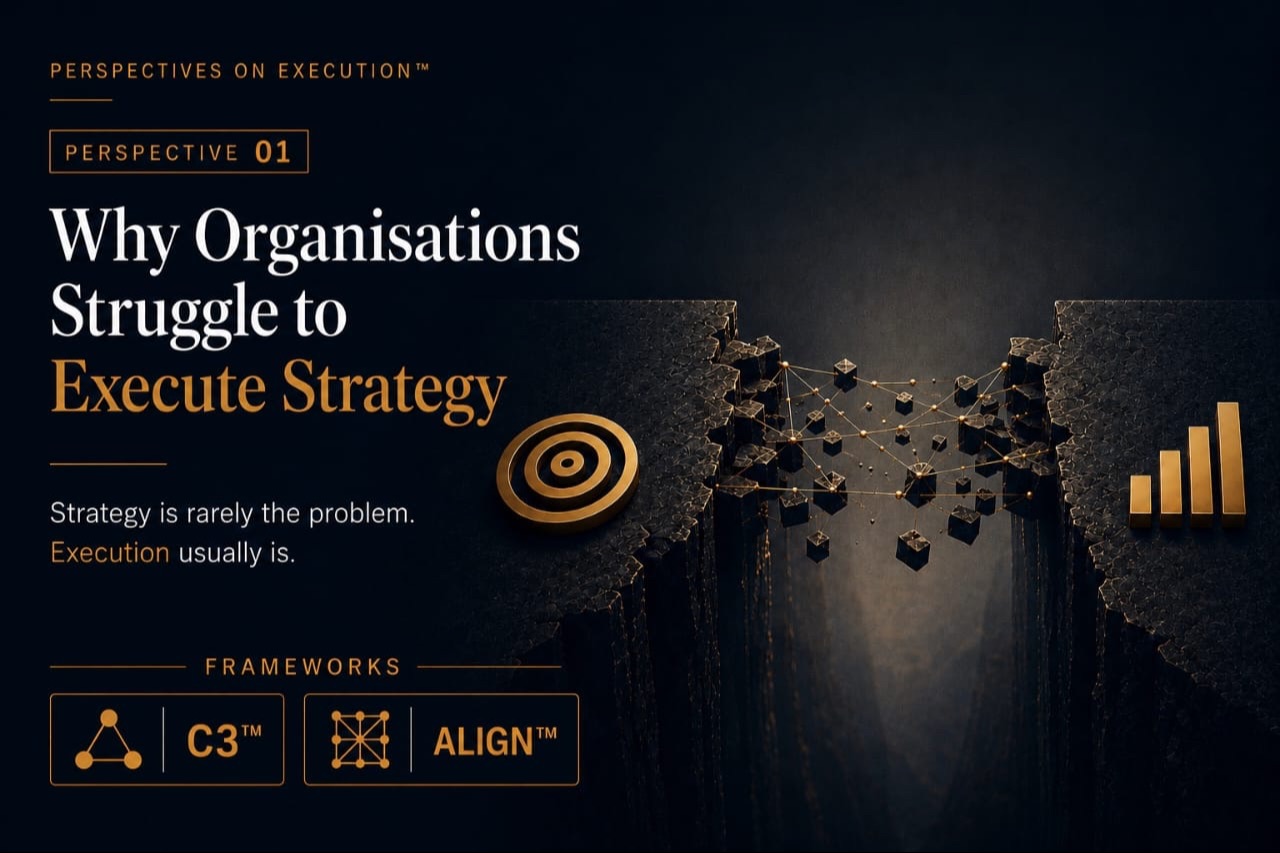
Strategy failure rarely arrives as a dramatic event.
More often, performance deteriorates through small deviations that accumulate over time: shifting priorities, slower decisions, diluted accountability, fragmented governance, and weakening execution discipline.
The organisations that recover fastest are usually the ones that detect drift earliest.
STRATEGY DRIFT RARELY HAPPENS SUDDENLY
Very few organisations wake up one morning and discover their strategy has failed.
What happens instead is far more subtle.
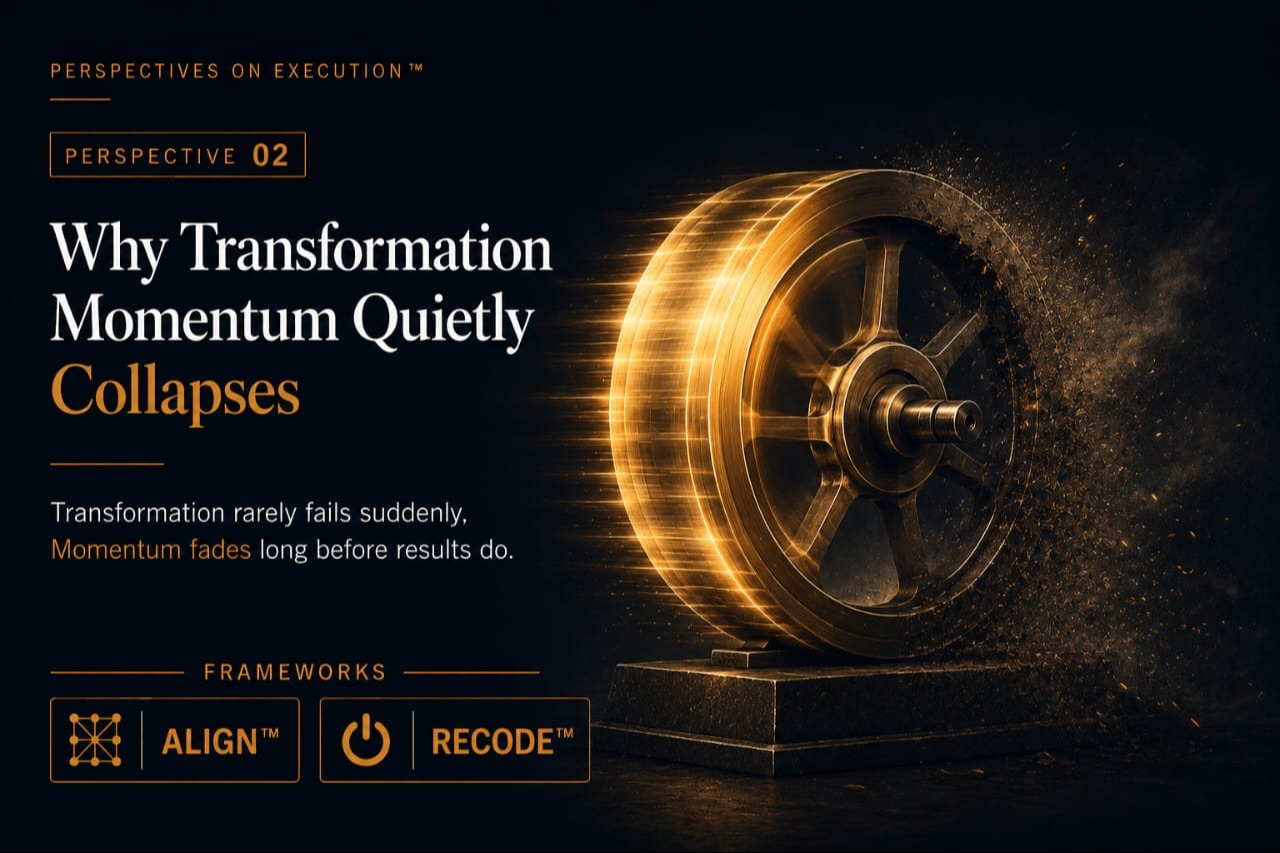
Performance begins to soften. Strategic priorities become less visible. Meetings become increasingly operational. Decisions take longer. Initiatives lose momentum. Accountability becomes less clear. Leaders become consumed by urgent issues while important issues wait their turn.
None of these developments seem significant in isolation.
In fact, most appear entirely reasonable at the time.
The challenge is that strategy drift rarely arrives as a major event.
"Strategy drift arrives as a series of small compromises that accumulate over months and years."
It arrives as a series of small compromises that accumulate over months and years.
I have seen this pattern in organisations of different sizes, industries, and levels of maturity. The organisation often remains successful enough to avoid immediate concern. Targets may still be achieved. Customers may still be satisfied. Operations continue to function.
Yet beneath the surface, the organisation is gradually moving further away from the outcomes its strategy was designed to achieve.
The danger is that success can sometimes conceal drift.
"Success can hide drift long before failure exposes it."
When leaders are dealing with strong revenues, operational demands, regulatory requirements, customer issues, and day-to-day pressures, it becomes difficult to distinguish between healthy adaptation and gradual loss of strategic focus.
By the time the consequences become obvious, valuable time has often been lost.
The organisations that manage this best are not necessarily those with the most detailed strategic plans. They are the ones that continuously test whether execution remains aligned with strategic intent.
They ask difficult questions.
Are our priorities still clear?
Are we allocating resources to the right opportunities?
Are leaders reinforcing the same messages?
Are governance forums accelerating decisions or delaying them?
Are teams focused on activity or outcomes?
Most importantly:
Are we creating the value we should be creating?
In many cases, strategy drift is not caused by incompetence. It is caused by the absence of mechanisms designed to detect and correct drift before it becomes a performance problem.
Sometimes the answer is better diagnosis.
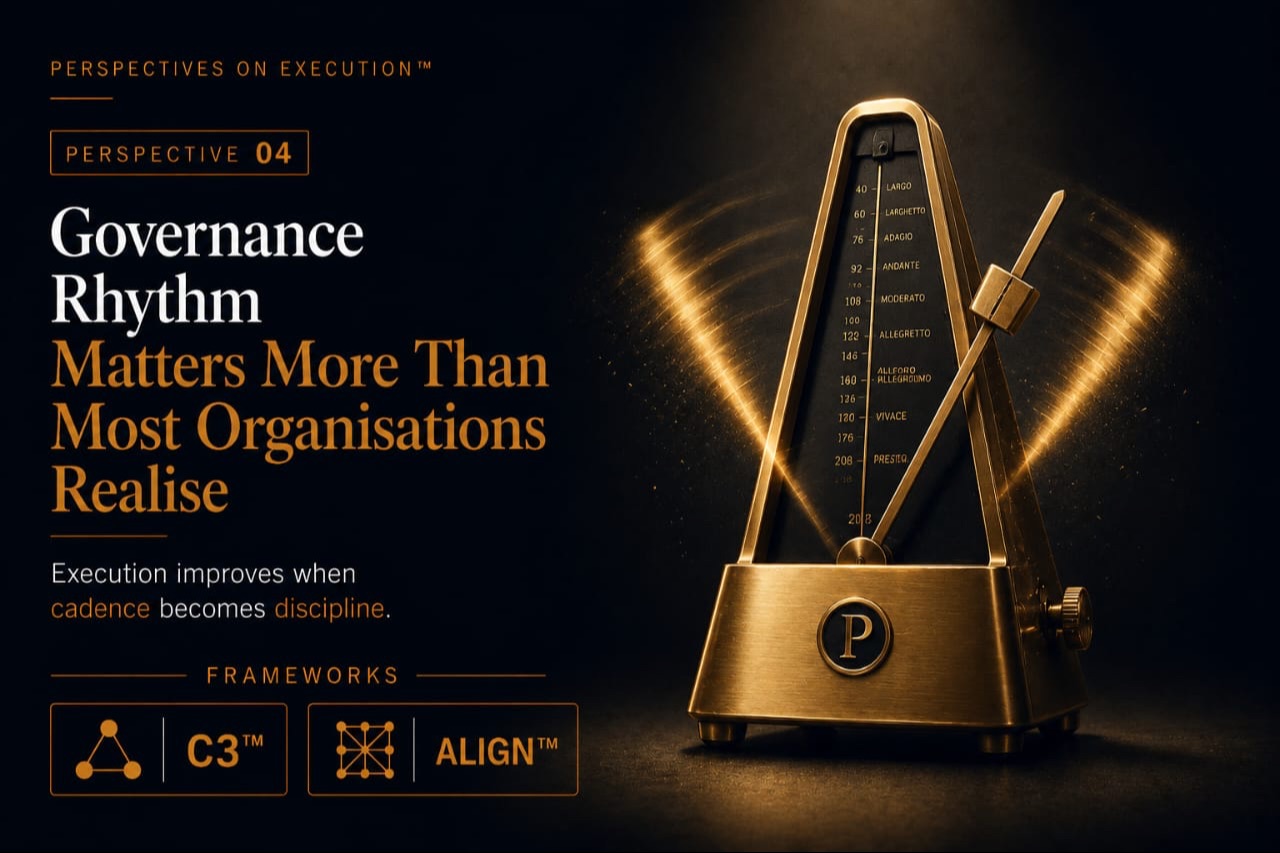
Sometimes it is stronger governance.
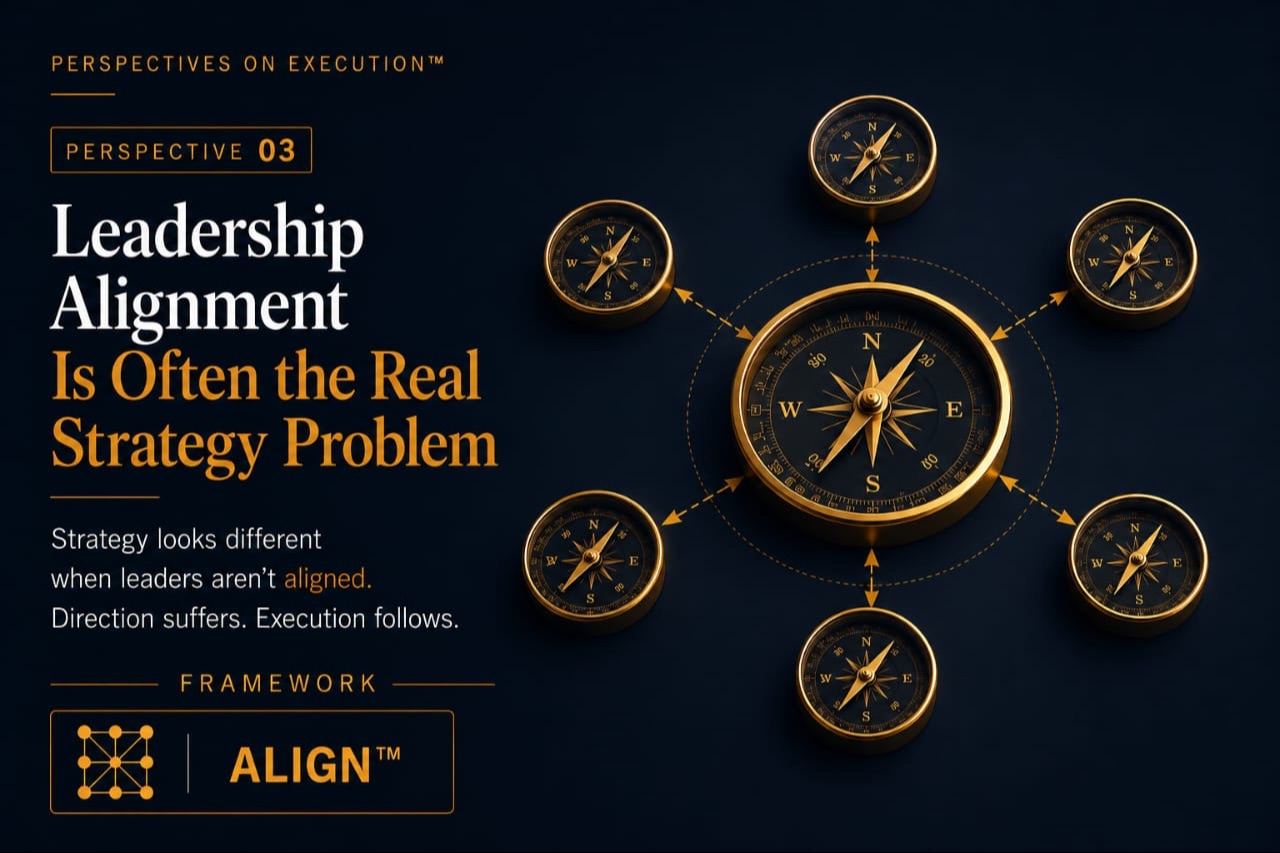
Sometimes it is leadership alignment.
Sometimes it is execution capability.
Sometimes it requires a structured reset.
"Organisations rarely drift because people stop caring.
They drift because complexity increases faster than execution discipline."
The important point is that organisations rarely drift because people stop caring.
They drift because complexity increases faster than execution discipline.
That is why high-performing organisations do not simply review strategy periodically. They build systems that help them detect drift, quantify its impact, and restore momentum before performance begins to suffer.
Because strategy drift is not a sign of failure.
Strategy drift is not failure.
It is a signal.
The question is whether leaders recognise the signal early enough to act.
---
If your organisation is concerned about slowing momentum, unrealised value, competing priorities, leadership alignment, governance effectiveness, or execution capability, it may be time to examine the systems operating beneath the strategy.
Explore Praxis AdvisoryTM, Execution LabTM, Executive Education & Speaking, or the Praxis Execution Diagnostic to identify performance gaps, restore alignment, and accelerate value delivery.
RELATED PRAXIS FRAMEWORKS
RECODETM
ALIGNTM
These frameworks help organisations detect strategic drift, restore leadership alignment, rebuild execution discipline, and strengthen performance momentum.
Could Strategy Drift Already Be Happening?
Most organisations do not recognise drift until performance deteriorates.
By then, significant value, time, and momentum have often been lost.
The better approach is early diagnosis.
SCHEDULE EXECUTIVE DIAGNOSTICS