EXECUTIVE SUMMARY
Most organisations focus on strategy, structure, talent, and technology.
Far fewer examine the governance rhythms that determine how decisions are made, priorities are reinforced, accountability is maintained, and obstacles are removed.
Execution is often a governance challenge before it is a strategy challenge.
GOVERNANCE RHYTHM MATTERS MORE THAN MOST ORGANISATIONS REALISE
When leaders think about improving performance, governance is rarely the first thing that comes to mind.
Most attention goes to strategy, structure, talent, technology, or culture. Governance is often viewed as an administrative necessity; something required for oversight, reporting, and compliance.
In practice, I have found that governance is one of the strongest predictors of execution performance.
The reason is simple.
Organisations do not execute strategy annually.
They execute strategy weekly.
Sometimes daily.
"Organisations do not execute strategy annually. They execute strategy weekly"
What ultimately determines performance is not the quality of the strategy document sitting on a shelf. It is the rhythm through which priorities are reviewed, decisions are made, accountability is reinforced, and obstacles are removed.
I have worked with organisations that had highly capable leaders, talented teams, and clear strategic ambitions, yet struggled to deliver expected results. When we looked closely, the issue was rarely a lack of effort. More often, the governance rhythm itself was working against execution.
"The governance rhythm itself was working against execution."
The consequence was not usually visible in a single quarter.
Instead, it appeared gradually through missed opportunities, delayed benefits, slower delivery, duplicated effort, and unrealised value.
This is why I often encourage leadership teams to ask a different question.
Not simply:
"Are we executing?"
But:
"What is our current performance costing us?"
Most organisations can identify the value they are currently delivering.
Far fewer can quantify the value they could be delivering.
Between those two numbers sits a gap.
A gap created by delayed decisions, competing priorities, weak accountability, unclear ownership, fragmented governance, and inconsistent execution discipline.
That gap is often larger than leaders realise.
"The challenge is not identifying new opportunities.
The challenge is converting existing opportunities into results."
In many cases, organisations pursue new initiatives to improve performance when significant value already exists within the current business. The challenge is not identifying new opportunities. The challenge is converting existing opportunities into results.
Doing so requires more than better reporting.
It requires a governance rhythm designed for execution.
The highest-performing organisations I have observed treat governance as a mechanism for accelerating value delivery. Their leadership meetings drive decisions. Their review cycles reinforce priorities. Their governance forums create accountability. Their operating rhythms help leaders focus attention where it matters most.
In short, governance becomes an execution system rather than a reporting system.
"Governance should accelerate execution, not document it."
That distinction matters because strategy does not create value.
Execution creates value.
And governance is often the mechanism through which execution either accelerates or slows.
Before organisations invest in new programmes, new structures, or new initiatives, it is worth understanding how much value may already be trapped within the current system.
Because in many organisations, the greatest opportunity is not outside the business.
It is hidden in plain sight.
Waiting to be unlocked through better execution.
---
If your organisation suspects it is leaving value on the table, it may be time to examine the governance rhythms, execution disciplines, and accountability systems operating beneath the surface.
Learn more about the Praxis AdvisoryTM Execution Diagnostic and Value Creation Opportunity Assessment, designed to identify unrealised value, quantify the gap to potential, and install the execution architecture required to close it.
RELATED PRAXIS FRAMEWORKS
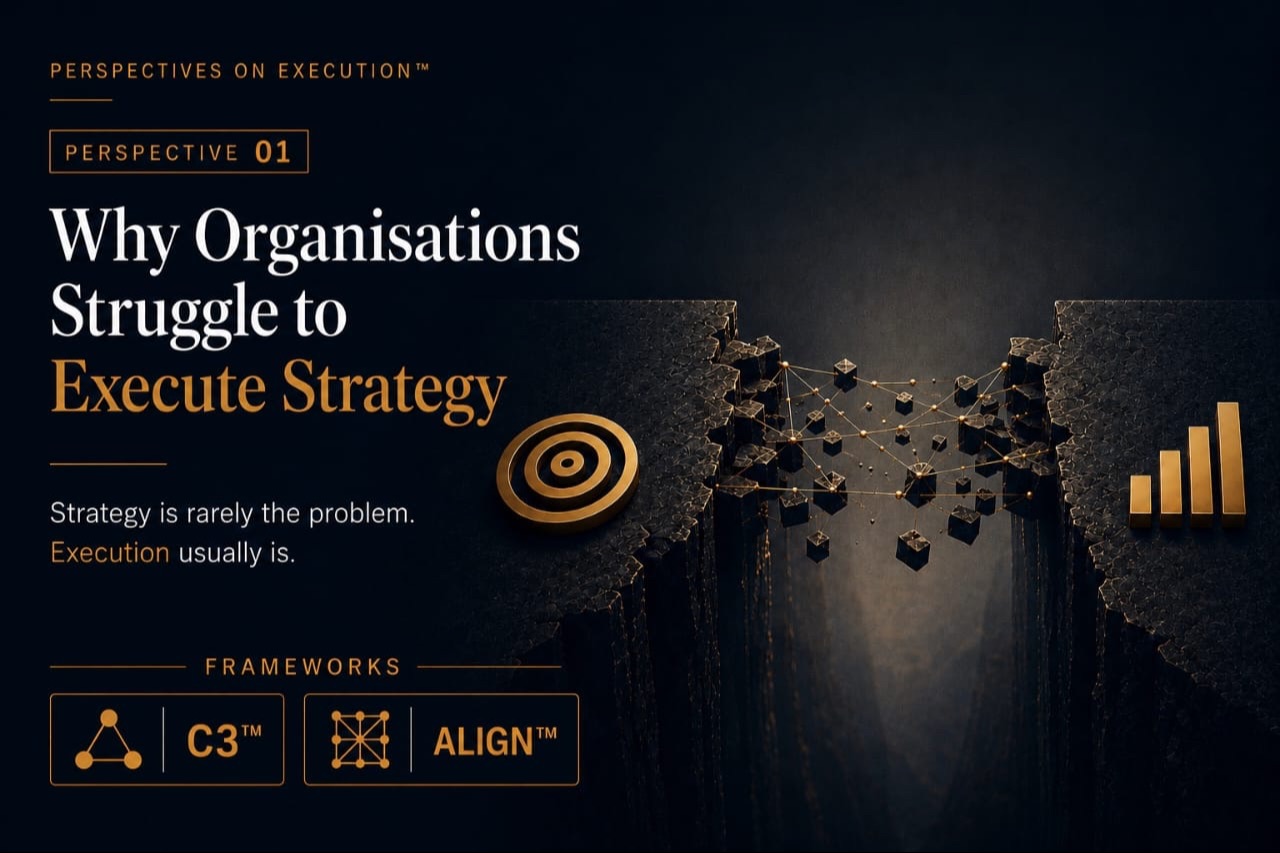
C3TM
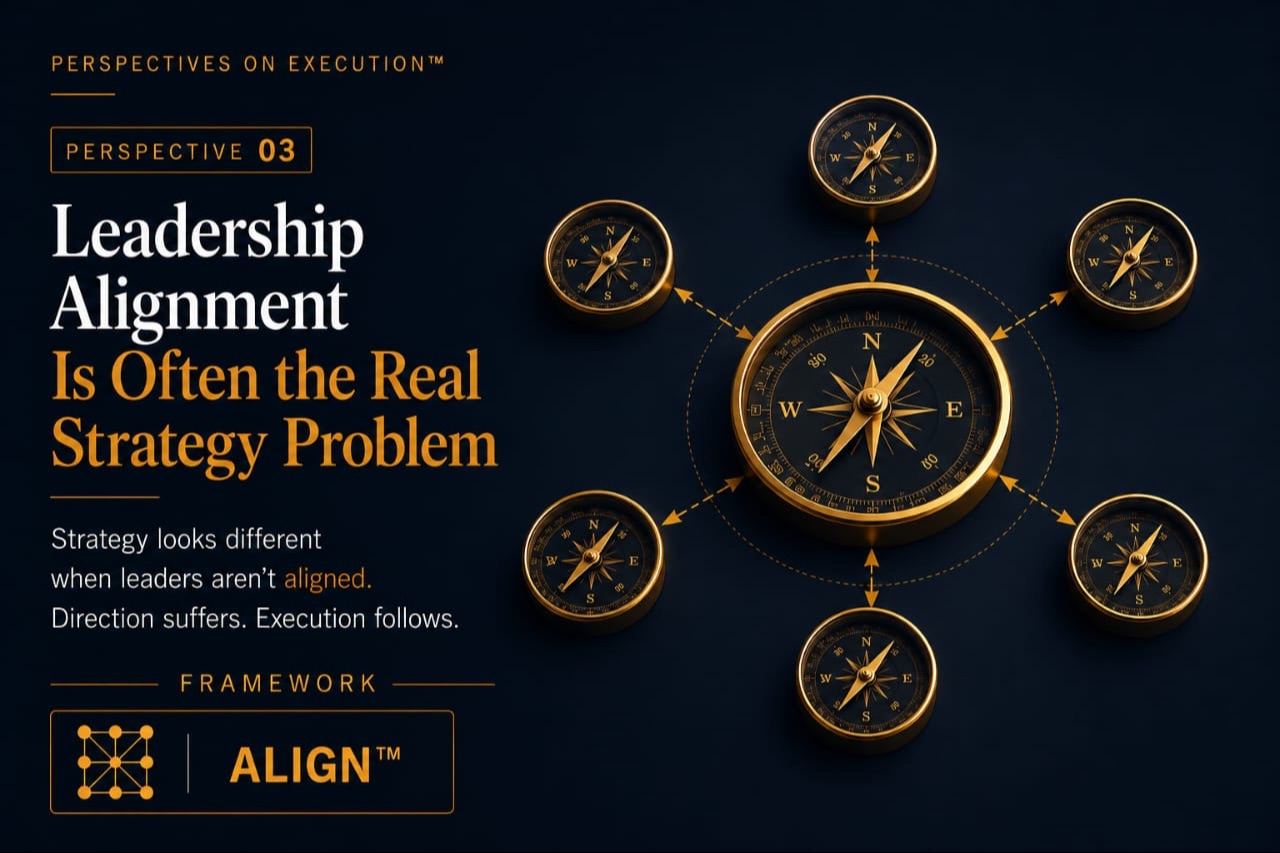
ALIGNTM
These frameworks help organisations create the governance cadence, decision discipline, accountability mechanisms, and leadership alignment required for consistent execution.
How Much Value Is Trapped Inside Your Current System?
Many organisations pursue new initiatives while significant value remains locked inside existing operations.
The issue is often not strategy.
It is the governance rhythm operating beneath execution.
SCHEDULE EXECUTIVE DIAGNOSTICS